

Brand identity is critical to helping you create content with a consistent look and feel. A strong brand identity creates instant recognition and helps your brand stand out in a crowded market. This article will guide you through the steps of creating a compelling brand identity.
By the end of this article, you’ll be able to:
-
-
Understand the concept of brand identity and its importance.
-
Analyze your target audience and competitors to refine your brand identity.
-
Create visual assets that represent your brand.
-
Apply your brand identity consistently across marketing and social media.
-
Brand identity
What is brand identity?
Brand identity is the full picture that defines how your audience sees your business. It goes beyond products and logos, connecting your visual appearance with your brand promise. It shows your customers and competitors who you are from the start.
Importance of brand identity
Taking time to consider your brand identity at the start of your journey can give you a solid footing for the rest of your marketing efforts. Good branding can be subtle but it’s always impactful, helping to inform the rest of your marketing output. Your unique visual design elements will communicate your brand personality, story, and values to your audience. Most importantly, your brand identity must mean something to your audience to foster trust and retain loyalty.
8 steps to creating a brand identity
Step 1: Define the purpose of your brand
Your brand purpose is the reason your business exists. It encompasses your business’s roots and values, and it answers questions like:
-
-
How do you serve your audience?
-
What inspires customers to choose you over competitors?
-
Successful slogans often reflect brand purpose. For example, Subway’s “Eat Fresh” slogan emphasizes its offering of healthier food options compared to other fast-food chains.
Step 2: Get to know your audience
Understanding your target market is key to refining your brand identity. Conduct research and interviews to learn about your audience’s wants, needs, habits, pain points, and motivators. This will help you align your brand to what resonates with your audience most.
Step 3: Check out your competitors
Research the competitive landscape and market trends. Analyze competitors’ brand messaging, visual branding, target audience, and customer experience to identify opportunities for your brand.
Step 4: Choose a compelling brand name
Your brand name reinforces your brand identity. It should sum up your business offering in a memorable way and set you apart from competitors. Ensure that your chosen name is unique by conducting a quick Google search.
Step 5: Craft your assets
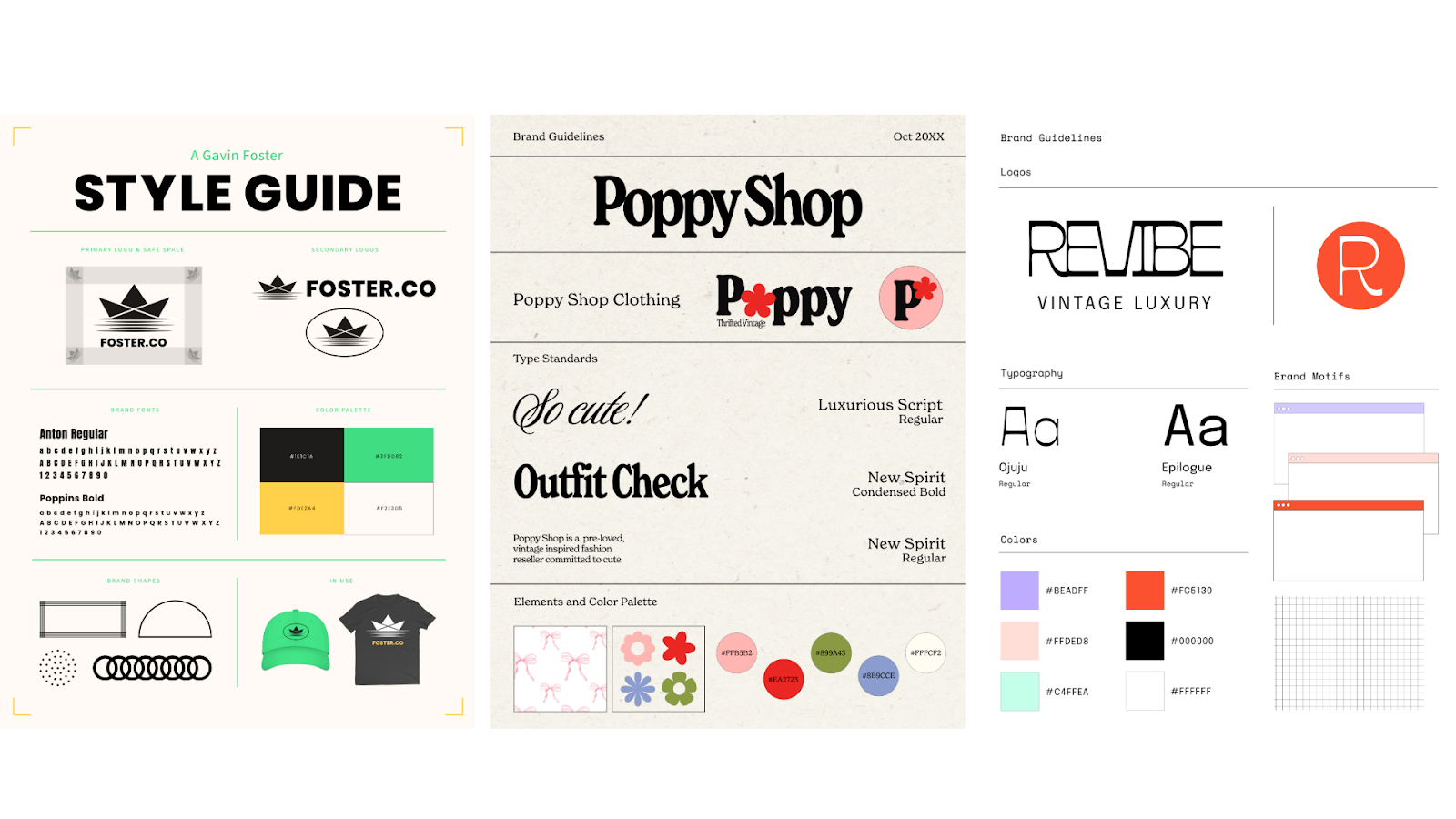
Once you know your “why” and your target market, it’s time to deliver on visuals. Common visual assets include:
-
-
Logos
-
Color schemes
-
Typography
-
Iconography
-
Photography and graphics
-
Step 6: Nail your brand story
Your story connects you with your audience by communicating your brand purpose in a relatable and marketable way. It can evoke an emotional response and encourage brand loyalty. Use an engaging narrative to share your company’s history, purpose, and values.
Step 7: Build a brand style guide
A brand style guide outlines all your visual marketing elements and contextualizes them with your brand purpose. It ensures a consistent look and feel across all marketing content. This guide will become your reference for everything related to content and design.
Step 8: Apply everything to your marketing and social media
Use your research, brand style guide, and brand story to apply your new brand strategy across your business. Consistency is key to building your brand identity and recognition. Ensure that all your social media and designs have a unified look and feel.
Conclution
By following these steps, you can create a strong brand identity that resonates with your audience and sets you apart from competitors.